‘Next Year’ Promise Lights Up American Wallets – But Legal Clouds Loom Over the Holiday Dreams
The hum of Air Force One slicing through the November clouds en route to Mar-a-Lago carried more than the usual weight of White House whispers on that crisp afternoon of November 16, 2025—a moment when President Donald J. Trump, ever the showman with a knack for turning policy into pageantry, dangled a lifeline to the heartland families who’d carried him back to power just 10 months prior. Leaning into the roar of the engines, Trump gripped the armrest and delivered a promise that rippled like a stone tossed into the Potomac: $2,000 tariff dividend checks for every American citizen, a direct rebate from the billions he’s raking in through his aggressive trade wars, coming not a day too soon but “next year.” “It will be next year,” he said, his voice booming with that unmistakable New York bravado, eyes alight as if envisioning the envelopes stuffed in mailboxes from Mobile to Milwaukee. “The tariffs allow us to give a dividend. We’re going to do a dividend and we’re also going to be reducing debt.” It was classic Trump—bold, unapologetic, a red-meat rallying cry for the rust-belt workers and suburban moms who’d braved long lines in 2024, betting their ballots on a man who vowed to make America not just great again, but richer in their pockets. But beneath the optimism, shadows loomed: a Supreme Court showdown that could gut the tariffs fueling this fiscal fairy tale, GOP grumbles over ballooning deficits, and the hard truth that no check clears without Congress’s ink. For families like the Garcias in Phoenix, scraping by on dual incomes that barely cover the mortgage, it was a spark of hope amid the holiday hustle—a tangible token of the America First agenda that feels as close as the next stimulus envelope.
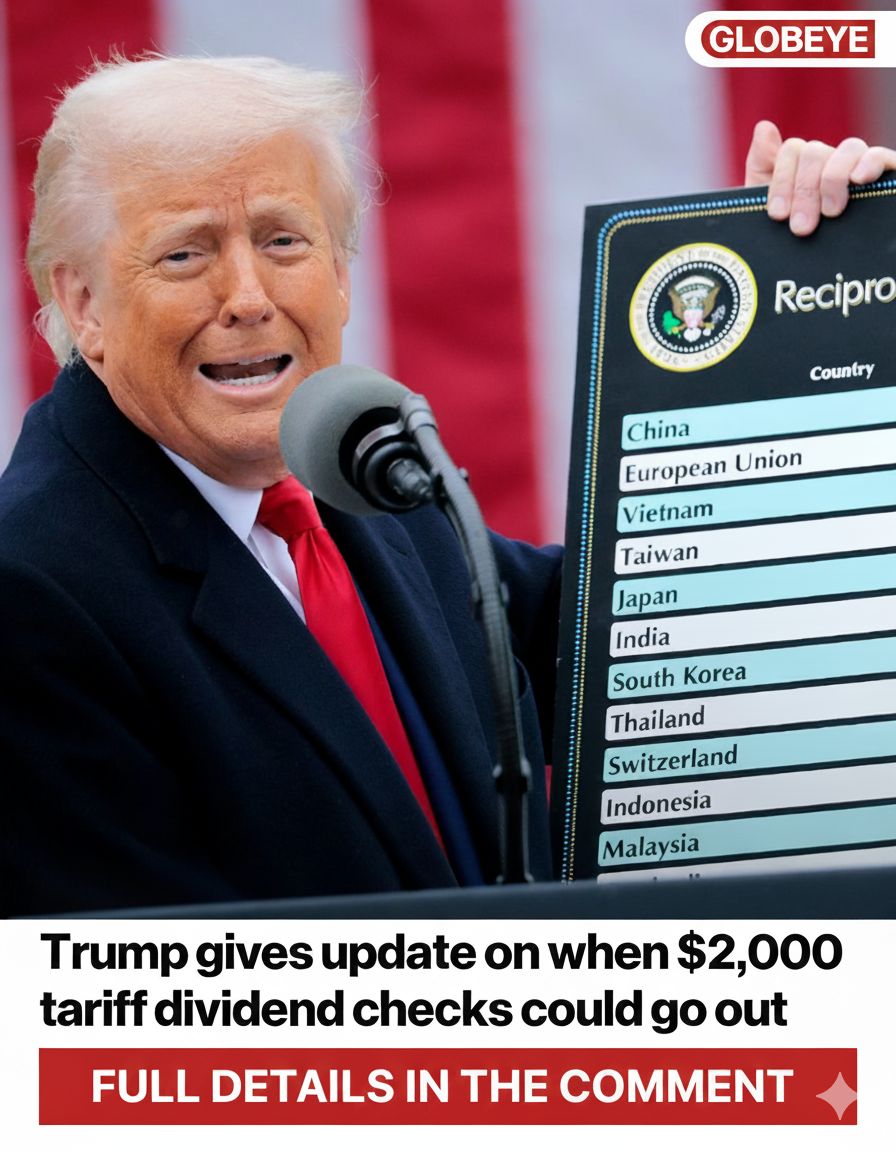
Picture the scene in a modest ranch house on the outskirts of Scranton, Pennsylvania, where Maria Garcia, a 42-year-old school bus driver with calluses from gripping the wheel through blizzards and budgets, pauses her Thanksgiving prep to scroll the news on her phone. Maria’s world, like so many in the swing-state suburbs that flipped red for Trump in ’24, is a delicate dance of dreams deferred: her husband’s factory layoff during the Biden slump, the $1,200 monthly health premiums that devour their savings, and the quiet fear that college for their 17-year-old twins might remain just that—a dream. When Trump floated the $2,000 “tariff dividend” back in early November, amid the off-year election dust-up where Democrats clawed back a few House seats on affordability cries, it landed like manna from Mar-a-Lago. “He’s thinking of us—the everyday folks who pay the price for these trade cheats,” Maria says, her voice catching as she chops onions for the stuffing, tears blurring the screen where Trump’s Air Force One clip plays on loop. That $2,000—$4,000 for her family—could cover the twins’ community college tuition, or finally fix the leaky roof that’s turned their attic into a puddle palace. It’s not welfare; it’s payback, Trump insists, a slice of the $195.9 billion in tariff revenue raked in from fiscal year 2025 through August 31, per U.S. Customs and Border Patrol figures—a war chest swelled by duties on China, the EU, Vietnam, and a dozen other “reciprocity” targets listed on the very chart he brandished at rallies. For Maria, whose parents fled Castro’s Cuba with nothing but hope, it’s poetic justice: the dealmaker-in-chief turning foreign foul play into family fuel.
Trump’s update wasn’t off-the-cuff bluster; it was a calibrated course-correct, delivered mid-flight as if the skies themselves were conspiring for clarity. The plan, first teased in a fiery post-election address at Madison Square Garden on November 9, envisions rebating tariff windfalls directly to citizens—a populist punch that echoes his 2017 tax cuts, which pumped $3.5 trillion back into pockets and sparked a pre-pandemic boom. But this one’s got a twist: tied to the International Emergency Economic Powers Act (IEEPA), the same legal hammer Trump wielded in his first term for China tariffs that generated $89 billion by 2020, now supercharged for a “reciprocity” regime hitting 14 nations with customized duties up to 60 percent. “We’re not just taxing; we’re triumphing,” Trump quipped in the clip, his grin as wide as the Grand Canyon, gesturing to a poster-board roster of targets from India to Indonesia. The math sings his tune: IEEPA tariffs alone hauled $90 billion between rollout and September 23, 2025, a gusher that could fund $2,000 checks for 150 million adults at a $300 billion clip, per Tax Foundation estimates—if capped at families under $100,000 annually, as Treasury Secretary Scott Bessent hinted in a Fox Business sit-down last week. Bessent, the hedge-fund hawk Trump tapped for Treasury, floated the income limit as a “common-sense guardrail,” ensuring the bounty flows to the middle, not the mansions—though Trump himself demurred on details, saying only, “We’re working it out, but it’ll be fair, believe me.”
Yet, as the promise soared on social feeds—#TariffDividends trending with 2.3 million posts by evening—the undercurrents of uncertainty swirled like storm clouds over the Potomac. Congress holds the purse strings, and with Republicans clinging to a 220-215 House edge and a filibuster-proof Senate cushion, passage isn’t a slam dunk. Deficit hawks like Sen. Rand Paul, who’d filibustered Trump’s 2024 spending bill, grumbled on the Senate floor that morning: “Tariffs are taxes on Americans—rebates or not, we’re borrowing from China to pay Peter.” The Congressional Budget Office’s preliminary score, leaked to Axios, pegs the full rollout at $464 billion over a decade—mirroring COVID-era stimulus costs—amid a $35 trillion national debt that’s ballooned 20 percent since 2021. Trump’s retort? A Truth Social blast at noon: “Fake news deficit doom—my tariffs cut debt like a hot knife, creating jobs and cash for the people!” It’s the optimism that endears him, the salesman sealing deals with sheer will, but even allies whisper of tweaks: pairing dividends with spending caps, perhaps a one-time payout tied to the 2026 midterms where affordability will be the ballot box battle cry.
The emotional heartbeat of this tariff tale beats strongest in the stories of those it’s meant to mend—families like the Thompsons in Battle Creek, Michigan, where dad Rick, a 50-year-old GM line worker, clocks overtime to cover braces for his 12-year-old. Rick’s shift ends with a weary sigh over the cafeteria coffee, his phone buzzing with Trump’s update as he scrolls Fox alerts. “Two grand? That’s our van payment for a year—hell, maybe a family trip to the lake without the credit card bleed,” he says, his laugh rough but real, eyes misting at the thought of his wife Lisa, a part-time cashier whose lupus meds eat 30 percent of their take-home. The Thompsons voted Trump twice, drawn by his first-term steel tariffs that saved 1,000 jobs in their plant alone, per UAW logs—a lifeline that kept Rick from the unemployment line when Obama-era trade deals gutted the Rust Belt. Now, with Biden’s “Build Back Better” legacy of 8.5 percent inflation scars, Trump’s rebate feels like restitution: a share of the $195.9 billion tariff haul funneled back to the folks footing the import bill at Walmart. “He’s keeping his word—the guy’s a fighter,” Rick adds, pocketing his phone as the whistle blows, the factory lights flickering like stars in the Michigan dusk.
Of course, no grand gesture unfolds without its gremlins, and Trump’s tariff triumph teeters on legal tightropes that could snap the checks before they’re cashed. The Supreme Court, in oral arguments on November 5 that had justices from Gorsuch to Sotomayor furrowing brows, grilled administration lawyers on IEEPA’s scope—whether Trump’s “emergency” declaration for trade imbalances stretches the 1977 law beyond breaking point. “This isn’t Pearl Harbor; it’s price tags,” Justice Elena Kagan quipped, her skepticism echoed in a 6-3 lean toward limits, per SCOTUSblog analysis. Trump, undaunted, shrugged it off in the Air Force One scrum: “If they strike it down, then I’d have to do something else—maybe even bigger!” It’s the bravado that buoys believers, but for Rick, poring over the transcript on his lunch break, it’s a knot in the gut: a rollback could mean refunds to China, not rebates to Michigan, echoing the 2019 court smackdown on his border wall funds that delayed miles of steel. Balanced against that, though, is the revenue reality: tariffs have already banked $90 billion since rollout, a buffer that buys time for legislative lifelines like the Reciprocity Trade Act, a bipartisan bill co-sponsored by Sen. Marco Rubio and Rep. Debbie Dingell, aiming to codify duties without IEEPA’s emergency crutch.
As the sun sets on Mar-a-Lago’s palm-fringed fairways, where Trump golfs with Bessent plotting the payout parameters, the dividend dream stirs souls from coast to coast—a beacon for the Marias and Ricks who’ve hitched their hopes to his hustle. Income caps? Under discussion, Bessent’s $100k threshold a nod to fairness without the “socialism” slur from Fox firebrands. Timeline? “Next year,” Trump vows, eyes on the midterms where Democrats’ affordability ads—blasting $5 gas and $6 eggs—nearly flipped the House blue. For the Garcias, prepping pie in Scranton, it’s more than money; it’s momentum, a proof point that Trump’s not just talking trade—he’s turning tariffs into treasures. Legal clouds may gather, congressional grumbles may grow, but in the quiet kitchens where families feast and fret, his words warm like hearthfire: relief on the way, debt on the downswing, America on the up. In a nation nursing wounds from pandemic pinches and policy pivots, Trump’s $2,000 pledge isn’t policy—it’s promise, a heartfelt handout from the dealmaker who delivers. As Thanksgiving tables groan and holiday lights twinkle, the wait for those envelopes feels less like limbo and more like launchpad—toward a 2026 where every citizen cashes in on the comeback. Trump’s not done fighting; neither are they. And in that shared stubbornness, hope holds firm.