Court Commentary
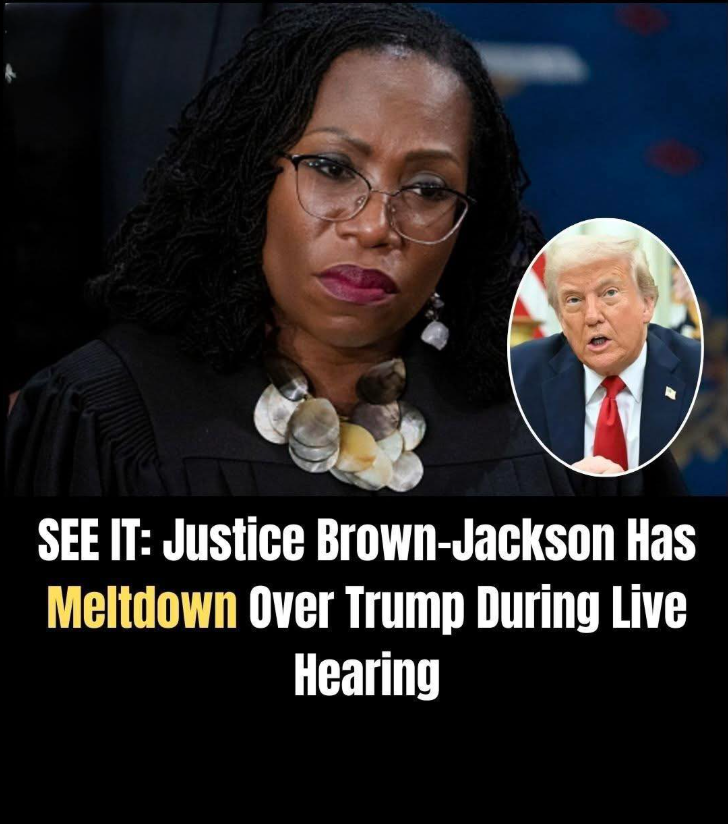
Since her confirmation to the United States Supreme Court, Justice Ketanji Brown Jackson has been one of the most closely watched — and most controversial — figures on the bench. Supporters praise her background as a public defender and her emphasis on compassion in the law. Critics, however, argue that her judicial record consistently reflects activism rather than restraint.
And once again, a recent Supreme Court ruling has reignited that debate.
For many Americans who already questioned whether Justice Jackson would apply the Constitution strictly or interpret it through a political lens, her latest dissent only reinforced their concerns. The divide over her judicial philosophy isn’t slowing down — it’s deepening.
A Confirmation That Sparked National Debate
Justice Jackson’s confirmation process was historic and intense. From the beginning, it was clear her nomination would be politically charged. Lawmakers on both sides recognized that this appointment would shape constitutional interpretation for generations.
Supporters emphasized her résumé, including her time as a federal judge and as a public defender. Critics, however, raised concerns about specific aspects of her legal record — particularly sentencing patterns, constitutional interpretations, and her approach to criminal justice.
One moment from her confirmation hearings continues to surface in public debate: her reluctance to offer clear definitions on foundational legal questions under direct questioning. For critics, that moment symbolized what they see as a broader pattern — evasion instead of precision.
Judicial Philosophy: Restraint vs. Interpretation
At the heart of the criticism is a fundamental disagreement over what the role of a Supreme Court justice should be.
Some believe the Court exists to interpret the Constitution as written. Others believe it must adapt constitutional principles to modern society.
Justice Jackson clearly falls into the second camp.
Her dissents often focus on outcomes, social implications, and perceived impacts rather than narrow constitutional limits. Supporters view this as moral clarity. Critics see it as judicial overreach.
This philosophical divide is not academic — it directly shapes rulings that affect gun rights, criminal sentencing, regulatory power, free speech, and individual liberty.
A Pattern in Dissents
One of the most striking aspects of Justice Jackson’s tenure so far is the style of her dissenting opinions. Unlike traditional legal dissents that focus tightly on precedent and statutory interpretation, her dissents frequently carry strong emotional language and moral framing.
In multiple high-profile cases, critics argue that her dissents read less like constitutional analysis and more like policy arguments.
Even some justices typically aligned with different ideological wings of the Court have quietly pushed back on what they view as weak legal grounding in certain dissenting opinions.
When rare moments of cross-ideological criticism emerge inside the Court, observers take notice.
Criminal Sentencing Controversies
Justice Jackson’s record as a lower-court judge continues to generate scrutiny, particularly in cases involving criminal sentencing.
Critics point to multiple rulings in which her sentencing recommendations fell well below federal guidelines. Supporters argue that she exercised proper judicial discretion. Critics argue that such discretion consistently leaned in one ideological direction.
This pattern has fueled broader public concern that her Supreme Court rulings may prioritize ideological outcomes over statutory standards.
Recent Ruling Reignites the Firestorm
In a recent case involving federal authority and enforcement limits, Justice Jackson issued a dissent that quickly went viral across legal circles.
Her dissent focused heavily on perceived societal consequences rather than the constitutional limits at issue. Legal analysts were quick to point out that the majority opinion followed long-established precedent.
Once again, the familiar argument returned: is the Court being asked to interpret the law — or rewrite it?
Public Trust and Judicial Legitimacy
The Supreme Court’s power depends almost entirely on one thing: public trust.
Justices are not elected. They cannot be voted out. Their authority exists only because Americans believe they are applying the law fairly and consistently.
When justices are perceived as political actors rather than neutral arbiters, that trust erodes.
Justice Jackson’s critics argue that her judicial style actively contributes to that erosion by blurring the line between law and ideology.
Supporters See a Different Picture
To be fair, Jackson’s supporters view her record very differently.
They argue she brings an essential perspective to the Court — one shaped by experiences outside elite prosecutorial circles. They praise her willingness to consider how laws affect real people and marginalized communities.
From their perspective, her dissents are not activism — they are warnings.
They believe history will ultimately vindicate her approach.
The Long-Term Impact
Regardless of where one stands, one fact is unavoidable: Justice Jackson will shape the Supreme Court for decades.
Her voting record will influence:
- Federal regulatory power
- Criminal sentencing standards
- Civil liberties
- Executive authority
- Constitutional interpretation itself
The consequences of her judicial philosophy will extend far beyond any single ruling or news cycle.
Final Analysis
Justice Ketanji Brown Jackson remains one of the most polarizing figures on today’s Supreme Court — not because of who she is, but because of how she interprets the role of judicial power.
To supporters, she is a necessary voice of conscience.
To critics, she represents the growing transformation of the Court from a constitutional body into a political battlefield.
That tension is not going away.
And as each major ruling arrives, Americans will continue asking the same question:
Is the Supreme Court still interpreting the law — or shaping it?