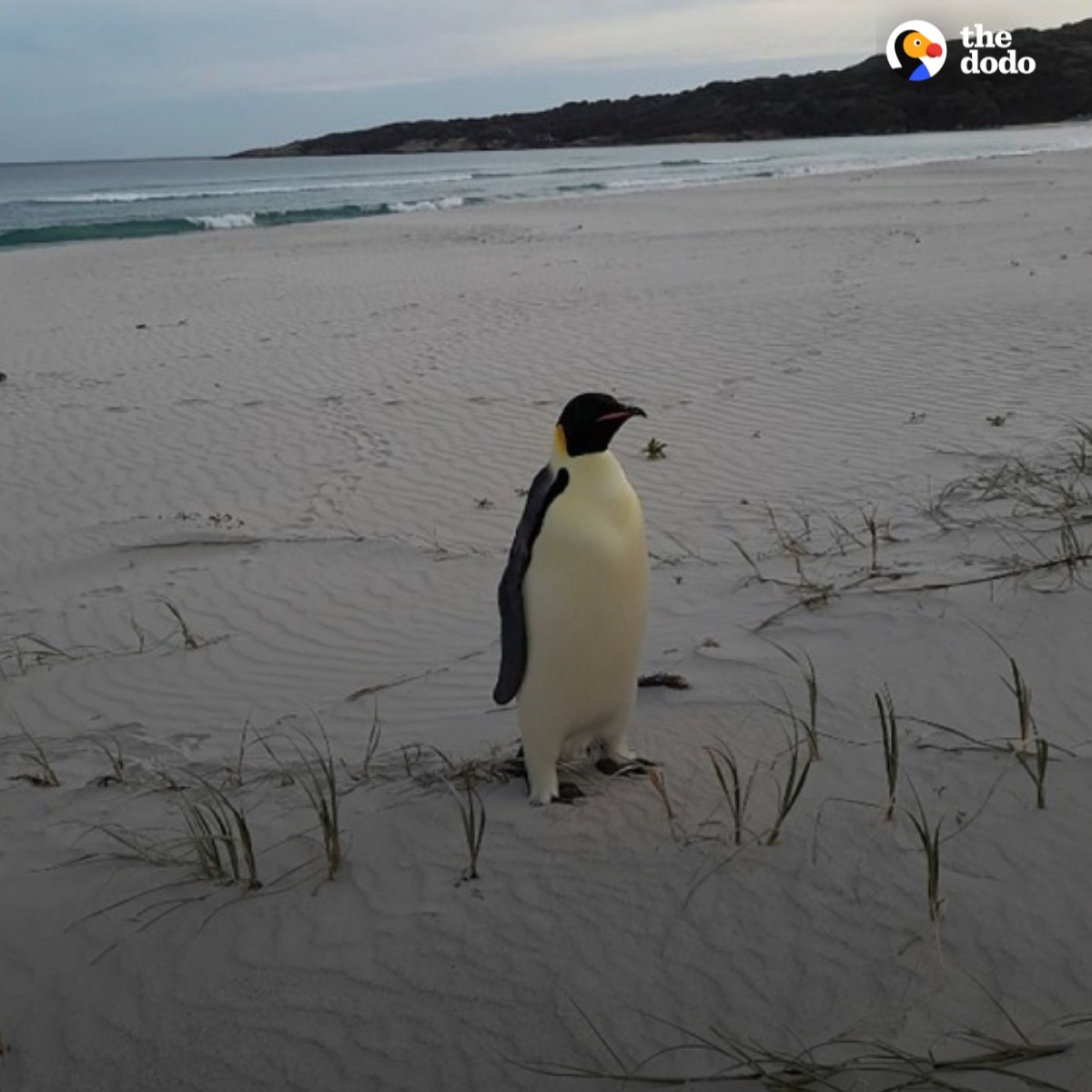
When you go surfing, you might expect to encounter seagulls, fish or maybe even a shark. So when surfers on an Australian beach spotted an enormous bird emerge from the waves last month, they were taken aback.
“It was massive, it was way bigger than a sea bird, and we’re like, ‘What is that thing coming out of the water?’” Aaron Fowler, a surfer who spotted the bird, told the Australian Broadcast Corporation. “It stood up in the waves and just waddled straight up to us.”
As the bird got closer, it became clear he was far from home — he was tall, had a black-and-white body and a yellow neck. He was none other than an emperor penguin.
While Australia is home to one species of miniature penguin, emperor penguins are native to Antarctica, which is separated from the beach where the bird was found by over 2,000 miles of ocean. No emperor penguin has ever been known to travel all the way to Australia.
While no one is certain why this particular penguin ended up so far from home, it’s likely that he started following a strong current while on a hunting trip. While emperor penguins are known to travel up to 1,000 miles in search of food, 2,000 miles is unheard of.
Because of his incredibly long journey, the penguin was underweight and weakened. He was half the weight of a healthy adult emperor penguin.
Wildlife rescuers Carol and Graham Biddulph took the penguin in for some much-needed recuperation. They nicknamed him Gus, after the Roman emperor Augustus.

As the wildlife rescuers cared for Gus, he started getting his strength back. In just three weeks, he had gained almost 8 pounds.
“The care, attention and efforts of Carol and Graham Biddulph has given the Antarctic bird, found thousands of kilometres outside of its home range and in a different climate, a fighting chance of survival,” a representative from Australia’s Department of Biodiversity, Conservation and Attractions (DBCA) wrote in a press release.

Once Gus started feeling better, it was time for him to return to the wild.
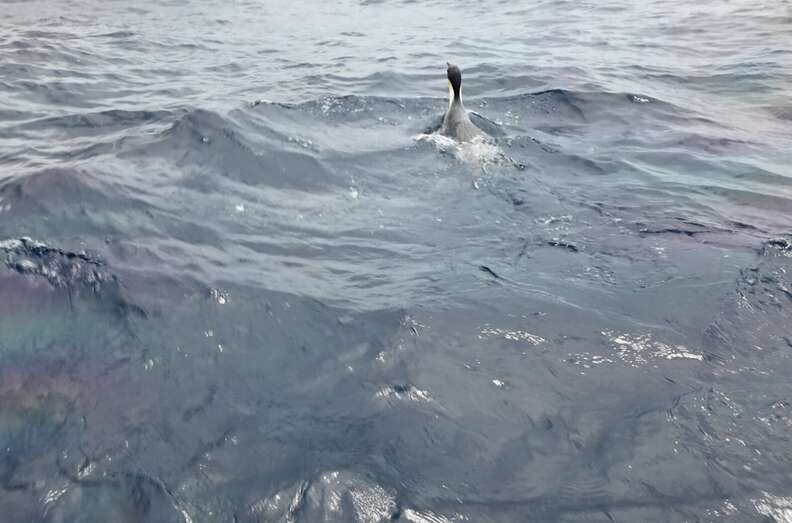
A team of veterinarians and wildlife experts transported him back to the Antarctic Ocean, where he swam back into the frigid water he calls home. Hopefully, he stays put this time.