House Passes ‘Take It Down Act’ to Combat Deepfake Pornography, Heads to Trump for Signature
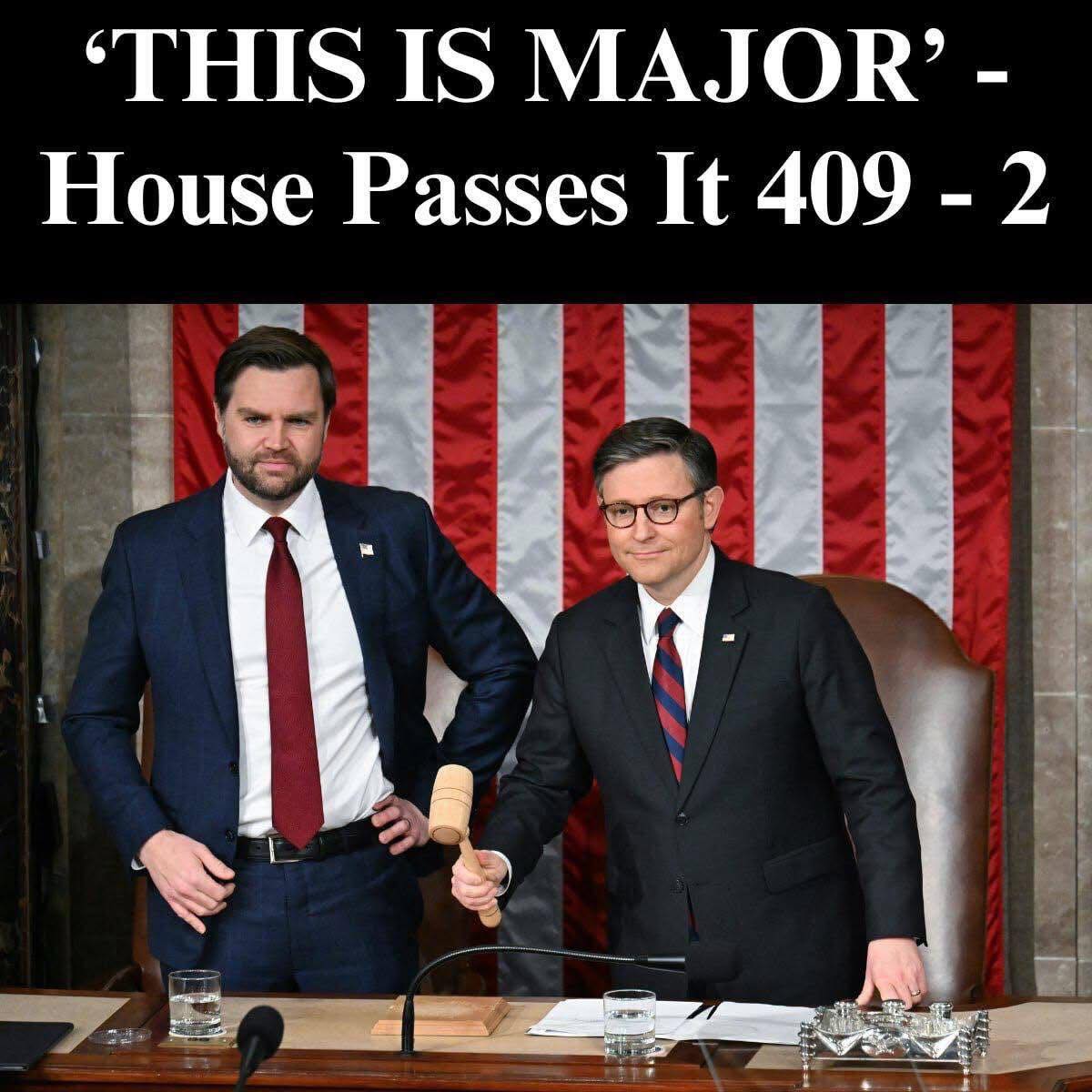
A bipartisan bill aimed at outlawing the online distribution of nonconsensual sexually explicit deepfake content cleared the U.S. House of Representatives on Monday in a sweeping 409–2 vote. The legislation, known as the Take It Down Act, now awaits President Donald Trump’s signature to become law.
Only two lawmakers — Reps. Thomas Massie (R-Ky.) and Eric Burlison (R-Mo.) — voted against the measure, while 22 representatives did not vote, according to The Hill.
What the Bill Does
The Take It Down Act would make it a federal crime to knowingly share realistic, computer-generated pornographic images or videos that depict real, identifiable people without their consent. It specifically targets deepfake content — AI-generated visuals that simulate real people — which has increasingly been used in harmful and exploitative ways.
The legislation requires platforms, including social media sites, to act swiftly in removing such content when reported, giving victims a legal avenue for relief and holding creators and distributors accountable.
Trump and Melania Express Support
President Trump previously endorsed the bill during a speech in March, signaling his intent to sign it into law. “Once it passes the House, I look forward to signing that bill into law,” Trump said. “And I’m going to use that bill for myself too if you don’t mind, because nobody gets treated worse than I do online — nobody.”
First Lady Melania Trump, who has consistently advocated for online safety initiatives, praised the bill’s passage. “Today’s bipartisan passage of the Take It Down Act is a powerful statement that we stand united in protecting the dignity, privacy, and safety of our children,” she said in a statement Monday evening.
Lawmakers Behind the Bill
The measure was spearheaded in the Senate by Sen. Ted Cruz (R-Texas) and Sen. Amy Klobuchar (D-Minn.), with Reps. Maria Elvira Salazar (R-Fla.) and Madeline Dean (D-Pa.) leading the House version.
Calling it a “historic win,” Cruz said the bill addresses a growing form of abuse. “By requiring social media companies to take down this abusive content quickly, we are sparing victims from repeated trauma and holding predators accountable.”
Opposition and Concerns
Rep. Thomas Massie, one of the two dissenting votes, voiced concerns about potential overreach. “I’m voting NO because I feel this is a slippery slope, ripe for abuse, with unintended consequences,” he posted on social media.
Some digital rights advocates echoed that sentiment. Becca Branum, deputy director of the Center for Democracy and Technology’s Free Expression Project, warned that the bill could have broader implications for free speech and privacy. “The best of intentions can’t make up for the bill’s dangerous implications for constitutional speech and privacy online,” she said.
A Win for Online Safety Advocates
Still, many supporters see the bill as a crucial step in tackling online exploitation, particularly targeting vulnerable populations, including children and women.
Brad Carson, president of Americans for Responsible Innovation, praised the bill’s passage. “For the first time in years, Congress is passing legislation to protect vulnerable communities online and requiring tech giants to clean up their act,” he said.
The Take It Down Act is also notable as the first youth-focused online safety bill to pass in this congressional session, marking progress in a field where other efforts — such as the Kids Online Safety Act (KOSA) — have stalled due to concerns over free speech and regulatory scope.
What’s Next
With Trump expected to sign the Take It Down Act into law, the U.S. could soon have new federal tools to combat deepfake pornography. As debates around tech regulation, AI, and free speech continue to evolve, this legislation may mark a turning point in how the government responds to emerging digital threats.