
This article may contain commentary
which reflects the author’s opinion.
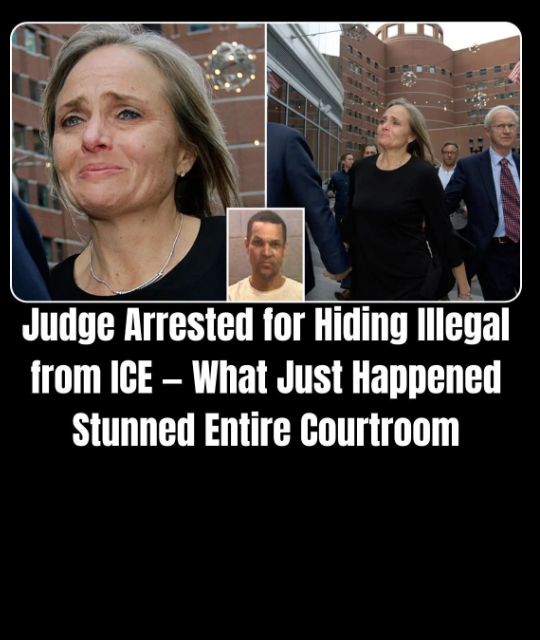
A state inquiry has found that a judge in Boston, Massachusetts, who is accused of trying to help an illegal immigrant avoid arrest by ICE had no awareness of the escape plot and merely accidentally helped it happen.
Judge Shelley Richmond Joseph did let the illegal immigrant leave her courtroom and go back to the courthouse’s lock-up area. There, the migrant’s lawyer and a court officer worked together to get the guy out of the building.
But Hearing Officer Denis J. McInerney’s investigation found that Judge Joseph didn’t know about these plans. She only allowed the immigrant go back to jail because she thought he needed to talk to his lawyer in private.
McInerney clearly said that what an interpreter and a lawyer said was not true.
He believed what Judge Joseph and another lawyer claimed instead: that the judge had never heard about the escape plan.
McInerney argued, meanwhile, that Judge Joseph should be publicly chastised for having an off-the-record sidebar conversation, which broke the rules and made people suspect she was helping the migrant escape.
“I believe that Judge Joseph did not know about the escape plan, let alone approve it, and did not lie to court officials after the event.” McInerney said, “However, I think she unintentionally gave the impression of bias and impropriety.”
Medina-Perez, who can’t come back to the U.S. until 2027, went to court on drug possession charges and a fugitive warrant from Pennsylvania. An ICE agent was waiting outside the courthouse to arrest him.
At the conduct review hearing, Judge Joseph’s lawyer stressed that her client had not been convicted guilty of any crime.
“Walk down the street and ask people what they think. All of them will tell you that Judge Joseph let an illegal immigrant out the back door of the district court,” her lawyer said in her opening remarks. “Half of them would say she’s a criminal and should go to jail. Half of them would name her a folk hero for what she did. But she really did it.
“People in Boston have talked about this so much that the media has mostly stopped using the words “alleged” or “charged.” They report on it and refer to it as if a dozen people had seen Judge Joseph get off the bench, walk the defendant to the door, hug him, and wish him Godspeed,” her lawyer said.
David Jellinek, Medina-Perez’s lawyer, made a deal with the federal government to provide him immunity in exchange for his testimony against Joseph.
Federal prosecutors said that Joseph told a court clerk to tell the ICE agent who was there to wait in the lobby. This meant that if the defendant was let go, he would leave the courtroom through the lobby entrance.
Joseph is said to have told the courtroom clerk to “go off the record for a moment,” which caused the courtroom audio recording to be turned off for 52 seconds.
When the audio recording started up again, Joseph said she would let the defendant go. In court papers, federal prosecutors alleged that Medina-Perez’s defense lawyer asked to meet with the defendant downstairs. Joseph remarked, “That’s great. Of course.”
Joseph is said to have said, “That’s OK,” when the clerk told the judge that an ICE officer was at the courthouse waiting for the defendant to be released. I won’t let them in here. B “However, he has been let go in this case,” court documents said.
The prosecutors also said that MacGregor took the defendant, his lawyer, and an interpreter to the courthouse lockup. He then used his security access card to open the back sally-port door, letting the defendant go away without anyone noticing.
In September 2022, the Justice Department dropped Joseph’s accusations after she went to the Massachusetts Commission on Judicial Conduct (CJC) and told them important things about the case.
The Massachusetts CJC officially accused Joseph of “willful judicial misconduct” and actions that were “prejudicial to the administration of justice.”