
This article may contain commentary
which reflects the author’s opinion.
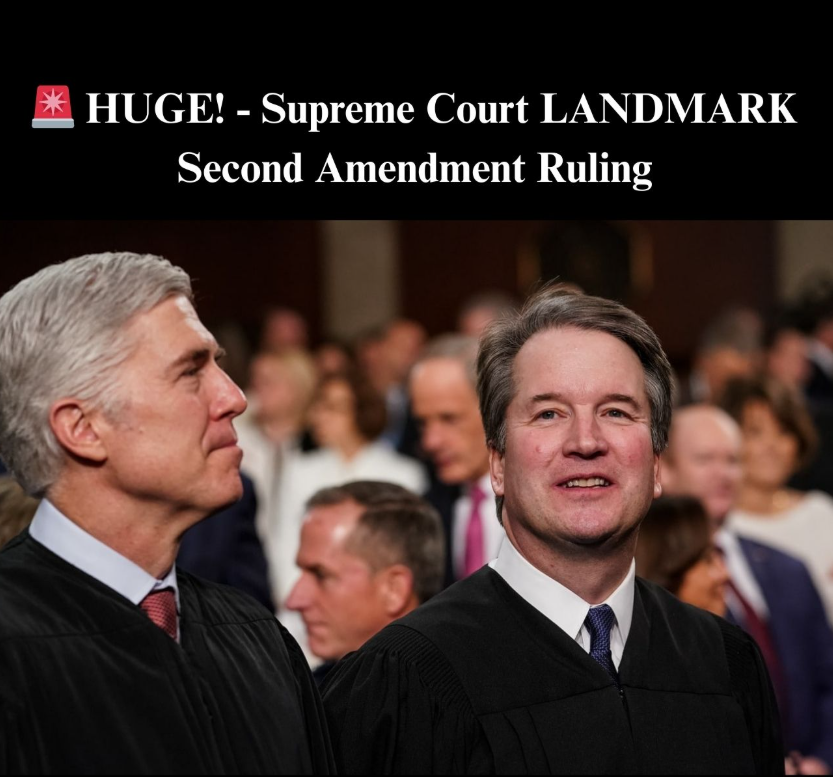
The U.S. Supreme Court heard arguments Tuesday in a high-profile challenge to a Hawaii gun law that critics have dubbed the state’s “vampire rule,” reflecting its requirement that licensed handgun carriers obtain express permission before entering private property open to the public.
The case, Wolford v. Lopez, centers on a 2023 Hawaiian statute that makes it a misdemeanor for concealed-carry permit holders to bring firearms into retail stores, hotels, restaurants, and other publicly accessible private property unless the property owner grants explicit verbal or written consent or posts clear signage permitting firearms.
Three Maui residents and the Hawaii Firearms Coalition sued soon after the law’s passage, arguing it violates the Second Amendment by significantly limiting where law-abiding gun owners can carry their weapons for self-defense. A federal judge initially blocked enforcement of parts of the law, but the 9th U.S. Circuit Court of Appeals largely upheld it, prompting the Supreme Court review.
In defending the statute, Hawaii officials assert the measure reflects a balance between public safety, property owners’ rights and constitutional rights, and is consistent with long-standing legal traditions governing property and firearms. Opponents, with support from the U.S. Department of Justice under the Trump administration, contend the law effectively nullifies the right to carry in most everyday public-private settings by imposing onerous consent requirements.
The high court limited its review to the so-called “default rule” about carrying on private property open to the public and will not address other elements of Hawaii’s broader firearms code, such as provisions governing “sensitive places” like bars or beaches.
The ruling is expected later this year and could have national implications for similar laws in California, New York, Maryland, and New Jersey that also hinge on property owners’ consent to armed entry.
Meanwhile, U.S. District Judge Jia Cobb in Washington, D.C., refused to block President Trump’s administration from enforcing a new policy requiring members of Congress to give a week’s notice before visiting immigration detention facilities.
Rep. Ilhan Omar, D-Minn., said that she and other Minnesota lawmakers were kicked out of an Immigration and Customs Enforcement (ICE) facility in Minneapolis on Saturday, January 10. After being told about the Trump administration’s rule about visits from lawmakers, they were told to leave the facility.
Attorneys for several Democratic members of Congress asked Cobb to step in, but the judge said on Monday that they used the wrong “procedural vehicle” to do so. The judge also said that the January 8 policy is a new action by the Department of Homeland Security that is not covered by her previous order in favor of the plaintiffs.
“The Court emphasizes that it denies Plaintiffs’ motion only because it is not the proper avenue to challenge Defendants’ January 8, 2026, memorandum and the policy stated therein, rather than based on any kind of finding that the policy is lawful,” Cobb wrote.
Cobb put a stop to an administration oversight visit policy last month. On December 17, she said that ICE probably can’t ask members of Congress to give them a week’s notice before they visit and see how things are at ICE facilities.
The Associated Press says that U.S. Department of Homeland Security Secretary Kristi Noem quietly signed a new memo the day after Renee Nicole Good died in Minneapolis. This memo reinstated a seven-day notice requirement.
Lawyers for the plaintiffs from the Democracy Forward legal advocacy group said that DHS didn’t tell them about the new policy until after Reps. Omar, Kelly Morrison, and Angie Craig were denied entry to an ICE facility located in the Minneapolis federal building.
Melissa Schwartz, a spokesperson for Democracy Forward, said they were looking over the judge’s most recent order.